Source Self Drilling Aluminum Shoulder Screw for Steel, Wood, and Metal
Compare 30 listings for self drilling aluminum shoulder screw options from verified Chinese suppliers. Buyers can evaluate material grades, drive types, and customization capabilities to find the right fasteners for construction and industrial assembly.
Key considerations
Products List






Comprehensive Sourcing Guide
Strategic Sourcing Guide for Self-Drilling Fasteners
The global procurement landscape for industrial fasteners requires a nuanced understanding of material properties, manufacturing standards, and supply chain reliability. While the core search term often focuses on specific alloys like aluminum, the actual market data for self-drilling fasteners reveals a complex ecosystem dominated by carbon steel and stainless steel variants. Buyers investigating "self-drilling aluminum shoulder screws" must first reconcile their specific material requirements with the available product attributes observed in the current supply base. This guide provides a disciplined framework for evaluating suppliers, verifying technical specifications, and managing procurement risks without relying on unverified claims or speculative market data.
Material Composition and Alloy Verification
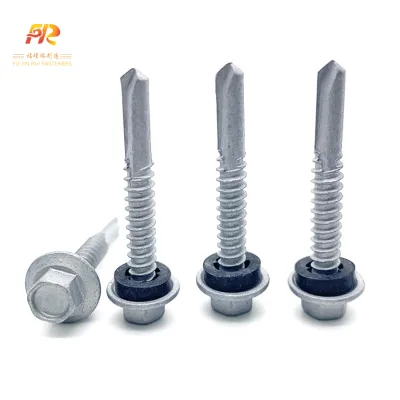
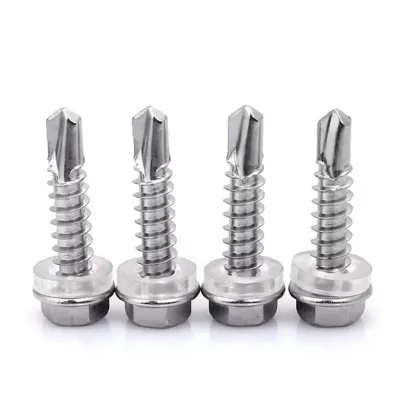
The primary challenge in sourcing self-drilling fasteners lies in the distinction between the intended material and the actual inventory available. The supplied product facts indicate a strong prevalence of Carbon Steel and Stainless Steel options. Specific observations confirm materials such as "Carbon Steel" and "Stainless Steel," with grades explicitly noted as "4" and "12" in certain listings. The attribute "Groove: Hexagon" and "Groove: Cross" further suggests that the drive mechanisms are standardized across these material types.
When a buyer specifically requests aluminum, it is critical to verify if the supplier can source this alloy or if they are primarily distributing steel alternatives. The provided data does not list aluminum as a confirmed material attribute for the observed products. Instead, the inventory includes "Hex Head Self Drilling Screw" and "Stainless Steel Self Drilling Screw" with surface treatments like "Zinc Plated." Buyers must explicitly confirm whether the supplier can manufacture or source aluminum variants, as the default market offering appears to be steel-based. If aluminum is a strict requirement, the buyer should request a Material Test Report (MTR) to verify the alloy composition, as the standard listings provided do not support an automatic assumption of aluminum availability.
Technical Specifications and Drive Systems
Technical precision is paramount when selecting self-drilling screws, particularly regarding head style, drive type, and dimensional tolerances. The observed product attributes highlight a variety of head styles, including "Hexagonal," "Hexagon Head," and "Countersunk Head." The drive types are consistently identified as "Hex" or "Cross" (often referring to a cross-recessed drive). These variations dictate the torque application and the specific application environment.
Dimensional specifications vary significantly across the supply base. The data lists multiple model ranges, including "3.5-6.3mm," "4.2-6.3mm," and a broader metric and inch range of "M2.9-M6.3" for diameters. Lengths are also specified in some entries as ranging from "6.5mm-300mm." Furthermore, the attribute "Size: Customized Size" and "Size: Customized" appears frequently, indicating that standard sizes may be supplemented by bespoke manufacturing.
Buyers must distinguish between standard catalog items and custom orders. The "prod_model" field shows entries like "001," "pdm," and "tapping Screw," suggesting that model numbers are not universally standardized across all suppliers. A comparison of typical drive and head configurations is essential for ensuring compatibility with existing assembly tools.
| Attribute Category | Observed Standard Options | Customization Availability |
|---|---|---|
| Head Style | Hexagonal, Countersunk Head | Available |
| Drive Type | Hex, Cross | Available |
| Diameter Range | M2.9 - M6.3 (Metric), Inch | Customized Size |
| Length Range | 6.5mm - 300mm | Customized Size |
| Material | Carbon Steel, Stainless Steel | Verify Alloy Request |
| Surface Finish | Zinc Plated, Silver | Available |
Compliance, Standards, and Regional Origins
Compliance with international standards is a non-negotiable aspect of B2B procurement for fasteners. The supplied facts reveal a diverse array of standards accepted by the market, including "GB," "DIN," "JIS," "GOST," "ANSI," and "BSW." Some listings combine these into comprehensive sets such as "GOST,GB,DIN,ANSI,JIS" or "JIS,GB,DIN,ANSI." This indicates that suppliers often adhere to multiple regional standards depending on the target export market.
The origin of the products is another critical factor. The data explicitly lists production locations in "China," with specific cities including "Hebei," "Ningbo," and "Qingdao." These regions are known for their manufacturing clusters, but the specific origin can influence logistics costs and lead times. The attribute "prod_origin" confirms that the majority of the observed supply chain is concentrated in these Chinese provinces.
Buyers must verify which specific standard applies to their order. For instance, a project requiring strict adherence to "DIN" standards may face compatibility issues if the supplier defaults to "GB" standards without explicit confirmation. The presence of "Standard: As Your Requests" suggests that some suppliers offer flexibility, but this requires rigorous quality assurance to ensure the custom standard is met. It is also important to note that while "ASTM B211" and "ASTM B164" appear in the background data, they are marked as low-confidence and should not be cited as confirmed certifications for any specific product without direct verification from the supplier.
Cost Drivers and Pricing Dynamics
Understanding the cost structure of self-drilling fasteners requires an analysis of material, customization, and logistics. The observed price range in the market data spans from 0 to 1600 USD, though this wide range likely reflects the difference between single-unit samples and bulk container orders. The Minimum Order Quantity (MOQ) varies drastically, ranging from 1 to 10,000 units. This suggests that buyers can source small quantities for prototyping but must plan for significant volume commitments to achieve optimal pricing.
Material cost is a primary driver. The shift from standard carbon steel to stainless steel or aluminum will inherently increase the unit cost. The "Zinc Plated" surface treatment adds a layer of corrosion resistance but also a processing cost. Customization is another significant cost factor. The attribute "Customization: Available" and "Customized: Yes" implies that non-standard sizes, grades, or head styles will incur additional tooling or setup fees.
Lead times are also a variable cost driver. One specific observation notes a "Production Time: 25-30days for One Container." This timeframe must be factored into the total cost of ownership, especially for projects with tight deadlines. Buyers should inquire about expedited production options and their associated premiums. Packaging costs, ranging from "Carton, Boxes, Ton Bag" to "Inner Box Then Carton and Palletized," also contribute to the final landed cost, particularly for international shipping.
Supplier Evaluation and Operational Capabilities
Evaluating a supplier requires looking beyond the product listing to their operational capacity and reliability. The data indicates that "Samples: Provide" is a common offering, which is a positive indicator for quality verification before bulk ordering. The ability to provide samples allows buyers to test the self-drilling performance, thread engagement, and material hardness in their specific application.
Supplier locations in "Hebei," "Ningbo," and "Qingdao" suggest a mature industrial infrastructure, but buyers should verify the specific factory's capacity. The attribute "Production Time: 25-30days" provides a baseline for scheduling, but buyers must confirm if this is a fixed lead time or subject to fluctuation based on order volume. The "Brand: Marink" is mentioned in the data, but buyers should be cautious about relying on brand recognition without verifying the actual manufacturer behind the brand.
When evaluating suppliers, buyers should request a detailed breakdown of their quality control processes. The presence of multiple standards (GB, DIN, JIS, etc.) suggests that capable suppliers have the technical expertise to meet diverse requirements. However, the buyer must ensure that the specific standard requested is the one being manufactured, not just a standard the supplier is "aware" of.
Quality Control and Long-Term Procurement
Quality control in the fastener industry is critical to prevent structural failures. The "Surface: Zinc Plated" attribute indicates a focus on corrosion resistance, but the thickness and uniformity of the plating are not specified in the general data. Buyers should request evidence of salt spray testing or other corrosion resistance tests, especially for applications in harsh environments.
For long-term procurement, consistency is key. The "prod_packing" attributes vary from "Cartons" to "Cartons+Plastic Bags" to "as Your Requests." Standardized packaging is essential for inventory management and preventing damage during transit. Buyers should establish a strict packaging specification in their contracts to ensure that the "Inner Box Then Carton and Palletized" method is used consistently for large orders.
The "Customization: Available" feature offers flexibility for future product iterations, but it introduces a risk of variation between batches. To mitigate this, buyers should maintain a "Golden Sample" approved by both parties and require that all future production matches this sample. The "Grade" attributes, such as "4" and "12," should be clearly defined in the purchase order to avoid ambiguity regarding material strength and hardness.
Conclusion
Sourcing self-drilling fasteners, particularly those with specific material requirements like aluminum, demands a rigorous approach to verification and specification. The current market data highlights a robust supply of carbon steel and stainless steel options with diverse standards and customization capabilities. Buyers must navigate the gap between their specific material needs and the available inventory by requesting detailed material certifications and test reports. By focusing on technical specifications, verifying compliance with relevant standards, and establishing clear quality control protocols, procurement teams can secure reliable supply chains that meet the demands of modern industrial applications. The flexibility observed in packaging, sizing, and standard adherence provides opportunities for tailored solutions, provided that the buyer maintains strict oversight of the manufacturing and quality assurance processes.
FAQs
What materials are available for self-drilling screws?
The available materials are carbon steel and stainless steel. The current product listings do not confirm aluminum as a standard inventory item, so buyers must explicitly request material verification or test reports if aluminum is required.
Which standards do the manufacturers follow?
Manufacturers adhere to standards including GB, DIN, JIS, GOST, ANSI, and BSW. Specific orders may require confirmation of the exact standard, as some suppliers offer customization to meet specific regional or project requirements.
Can I order customized sizes and specifications?
Yes, customization is available for sizes, grades, and head styles. Buyers can request specific dimensions ranging from M2.9 to M6.3 diameters and lengths up to 300mm, though this may involve additional tooling fees.
How long is the production lead time?
The production time is typically 25 to 30 days for one container. This timeline should be factored into project schedules, and buyers should verify if expedited options are available for urgent orders.
Where are the products manufactured?
Products originate from China, specifically in Hebei, Ningbo, and Qingdao. These locations represent major manufacturing clusters, and the specific origin can influence logistics costs and shipping times for international buyers.
What surface treatments are offered?
Common surface treatments include zinc plating and silver finishes. These treatments provide corrosion resistance, but buyers should request specific test data for salt spray resistance if the application involves harsh environments.
What is the minimum order quantity?
The minimum order quantity ranges from 1 to 10,000 units depending on the supplier. Small quantities are available for prototyping, while bulk orders are necessary to achieve optimal pricing and container shipping rates.